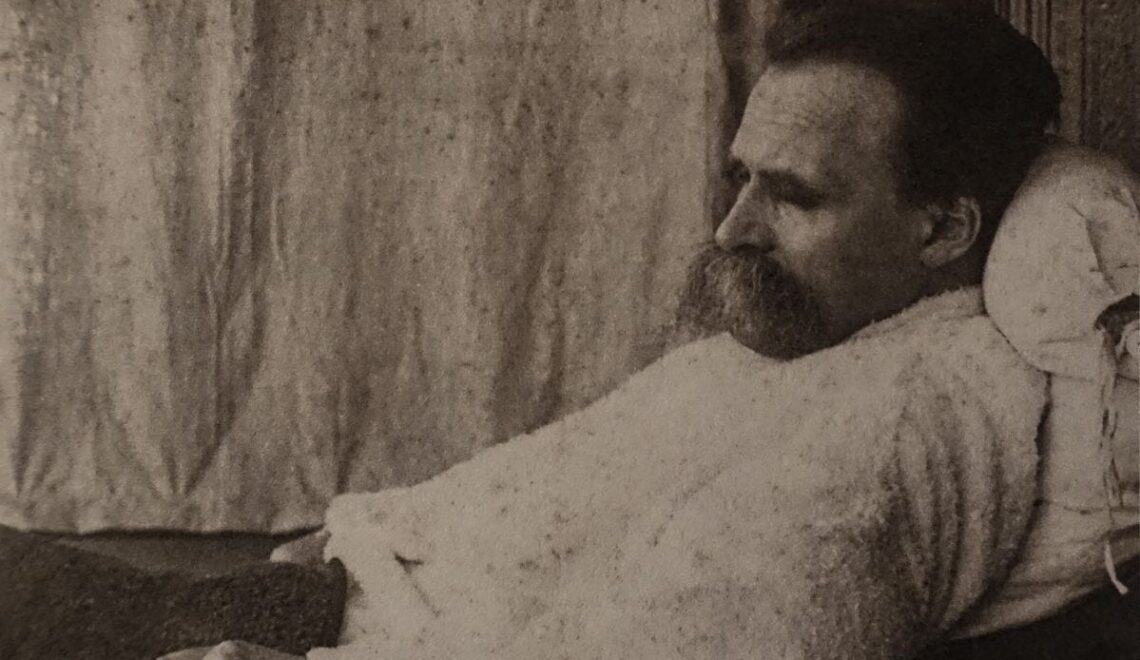
If meaning isn’t assigned to us, how do we continue to live purposefully? Nietzsche named this nihilism, the idea that there is no objective meaning that comes built into the world. For many, nihilism is interpreted as depressive or empty. Not for Nietzsche, he thought that nihilism was instead the moment where self-responsibility starts.
Nietzsche believed that identity is not pre-determined, but something we shape and reshape everyday. In his biographical book Ecce Homo, Nietzsche emphasizes the idea of becoming over simply being. His book depicts identity as something that is shaped over a period of time, through experiences, hardships, and change. Additionally, as argued by Nietzsche, meaning is not something that is assigned to you then remains in that state forever. If identity is predetermined and static, then failure becomes devastating and a picture of yourself that is fixed. But if identity is evolving, failure becomes a tool for shaping and reshaping yourself. Nietzsche argued that individuals lived according to what he called ‘herd morality’, which is essentially the act of simply “following” and adopting beliefs and values before one even considers whether they agree with them. Think of an actual herd where animals follow each other instinctively when they sense danger. Not one of them stops to ask where they’re going, they just move together because it feels safer.
This “herd morality” is a form of conformity. It prioritises comfort, safety, and approval over individuality. Nietzsche believed mass culture often rewards conformity over self-reflection and originality. When rubrics or popularity become the central method of measuring our worth, we stop reflecting on whether our deliberate choices are purposeful in representing who we are.
Nietzsche’s response to nihilism was not hopelessness. Scholars call Nietzsche’s response “active nihilism”, the idea that if meaning isn’t pre-determined, we create it. We differentiate instead of following inherited beliefs, we question labels instead of accepting them. We take responsibility for becoming instead of waiting to be defined. Although often seen as controversial, I believe that Nietzsche was misunderstood, at least in the context of his ideas on living life to the fullest. He believed that living a meaningful life does not require you to fit into what already exists or is approved; it’s about stepping up to create yourself, again and again.
The next time you find yourself overthinking your work, wondering if it will be “accepted” or fit into society’s rubric, or whether expressing yourself freely will make you stand out, stop and ask whether you are trying to shape yourself around what society wants to make you, or around who you’re trying to become? For me, I will always settle on the latter, because the former—what society wants, isn’t necessarily, as Nietzsche tells us, the best for me, you, or us.